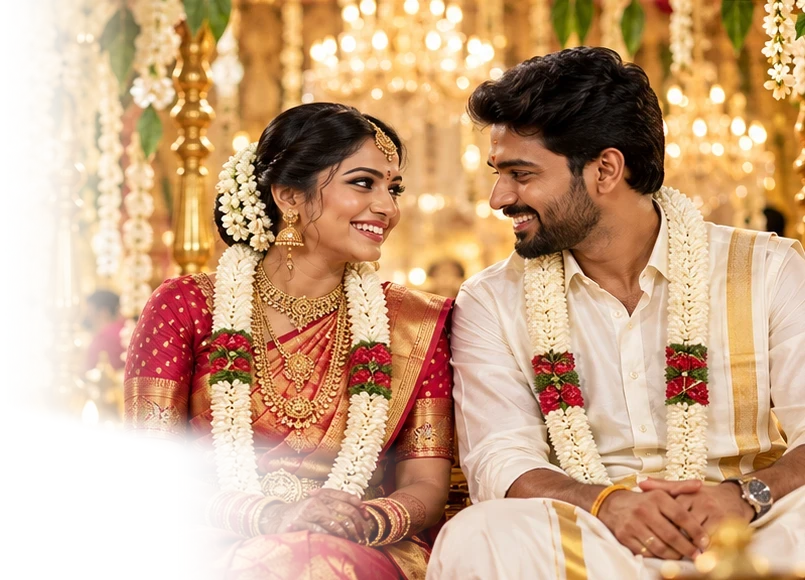
A Tamil wedding is a series of small, meaningful ceremonies that bring two families together. Whether you are planning your own wedding in Switzerland or attending one as a guest, here is a short guide to ten rituals you are likely to see – and what they mean.
1. Nichayathartham (engagement)
The formal engagement, where both families agree to the marriage. Gifts such as clothes, fruit and jewellery are exchanged, and the wedding date is usually announced.
2. Panda Kaal Muhurtham
A day or two before the wedding, a bamboo pole is planted and blessed. It is a prayer that the wedding preparations go smoothly.
3. Pallikai Thellichal
Married women fill clay pots with grains and sprout them. The sprouts are later released into water – a wish for fertility and abundance.
4. Nalangu
A playful, relaxed ceremony with turmeric, sandalwood and games between the bride and groom. It is often the most fun moment for guests.
5. Kashi Yatra
The groom pretends to leave for a life of study and prayer in Kashi. The bride’s father stops him and offers his daughter in marriage instead.
6. Maalai Maatral
The exchange of garlands. The couple swap garlands three times, often lifted high by their cousins, as a sign that they accept each other.
7. Oonjal
The couple sit on a decorated swing while married women sing and offer coloured rice balls. The gentle swinging stands for the ups and downs of married life.
8. Kanyadaanam
The bride sits on her father’s lap while he places her hand in the groom’s – one of the most emotional moments of the day.
9. Mangalya Dharanam
The central ritual: the groom ties the thaali (mangalsutra) around the bride’s neck at the auspicious time, while the nadaswaram plays and guests shower the couple with rice and flowers. This is where the name Mangalyam comes from.
10. Saptapadi
The couple take seven steps together around the sacred fire, each step a promise for their life together.
Planning your ceremony
Every family follows its own traditions, so talk to your elders and your priest early. On Mangalyam you can find priests, decorators, nadaswaram musicians and other vendors who know these rituals – and use our free planning tools to keep track of every detail.